Impaired kidney function in cats: recognising and treating symptoms
Many cats that have already reached their tenth year of life or more suffer from chronic impairment of kidney function. Treatment of affected animals is correspondingly common. Important here: the special kidney diet.
In this article we explain everything from the first signs through to the treatment of impaired kidney function and the options that exist.
What are the most important functions of the kidneys in cats?
The kidneys are vital organs whose main tasks are to maintain the body's fluid balance, filter waste products from the blood and produce important substances for calcium balance and blood pressure.
The kidneys are vital organs that take on a wide range of tasks in the body. These are:
- Maintain the balance of the body's fluid household through excretion via the urine
- A filter through which waste products are removed from the blood, while important substances remain in the body
- Production of various substances that are important for calcium balance, blood pressure and the production of red blood cells
Cats, like us humans, have two kidneys. Both are bean-shaped and each about three centimetres in size. A kidney consists of thousands of small functional units, also called nephrons. Their task is to filter the blood. To do this, blood is passed through the kidneys continuously.
If a cat is young and healthy, not all nephrons are in use. Many also serve as so-called reserve units, which are only needed when others no longer function. With advancing age, damage to the kidneys often occurs in cats. Even so, some nephrons die off over time. The reserve units then take over their functions, and they do so until all the nephrons are working.
If the damage to the kidneys nevertheless continues, first signs of chronic kidney insufficiency can appear in the cat.
What exactly happens in the kidneys in chronic kidney disease?
In the case of chronic kidney insufficiency, the diseased functional units (nephrons) fail, which leads to overloading of the healthy units and ultimately to the loss of the ability to regulate the composition of the urine.
In the case of kidney insufficiency, the diseased nephrons therefore fail and lose their important ability, which consists in regulating the composition of the urine. Nephrons that are still healthy then suddenly have to work much more, because the tasks do not become fewer. Overloading often follows, so that they ultimately fail as well. This also explains why an untreated chronic kidney disease often worsens over time.
Which causes lead to chronic kidney disease in the cat?
The causes are varied and range from poisoning (for example by antifreeze or plants of the lily family) and infections through congenital diseases (PKD), urinary stones, autoimmune diseases and tumours to malnutrition (phosphorus deficiency).
If a cat develops chronic kidney insufficiency, this can have various causes. In order to be able to help the cat in the best possible way, it is important to know these or to be able to rule out certain reasons:
- Medicines
- Poisoning that can occur through plants of the lily family, antifreeze, pesticides, herbicides and solvents
- Infections
- Heavy metals
- Inflammation of the renal pelvis
- Congenital kidney diseases, such as PKD (polycystic kidney disease)
- Urinary obstruction caused by urinary stones
- Kidney stones
- Autoimmune diseases
- Diseases of the immune system such as FIP (feline infectious peritonitis)
- Tumour in the kidney
- Phosphorus deficiency through incorrect feeding
Acute kidney disease often occurs through inadequate blood supply to the kidneys. This can happen if cats lose a great deal of fluid through a lack of water, shock or heavy blood loss, for example following an accident, and therefore suffer from dehydration. The kidneys can then no longer be supplied with enough blood, as a result of which they ultimately cease to function for a while.
In this case, veterinary help is essential so that the cat's kidneys function again as quickly as possible. Otherwise, chronic kidney disease can develop from this.
What is the difference between acute and chronic kidney disease?
An acute kidney disease has only been present for a short time and has a high likelihood of full recovery with professional treatment. Chronic kidney insufficiency, by contrast, has been present for a longer period (two months or more), is no longer curable and leads to the irreversible formation of connective tissue ("shrunken kidney").
If the cat has an acute kidney disease, this means that it has only been present for a short time. If the disease is then treated professionally, there is a high likelihood that the kidneys will recover from it completely again.
If the cat has already been ill for a longer period, however, this is chronic kidney insufficiency. In many cases it has already been present for two months or more at the time of diagnosis. Unfortunately, the exact trigger can then often no longer be identified, and restoring the diseased tissue is then no longer possible either. The cat's body itself replaces it with connective tissue. This can be imagined as the formation of a scar. The affected kidney thereby becomes smaller, so that one also speaks of a "shrunken kidney".
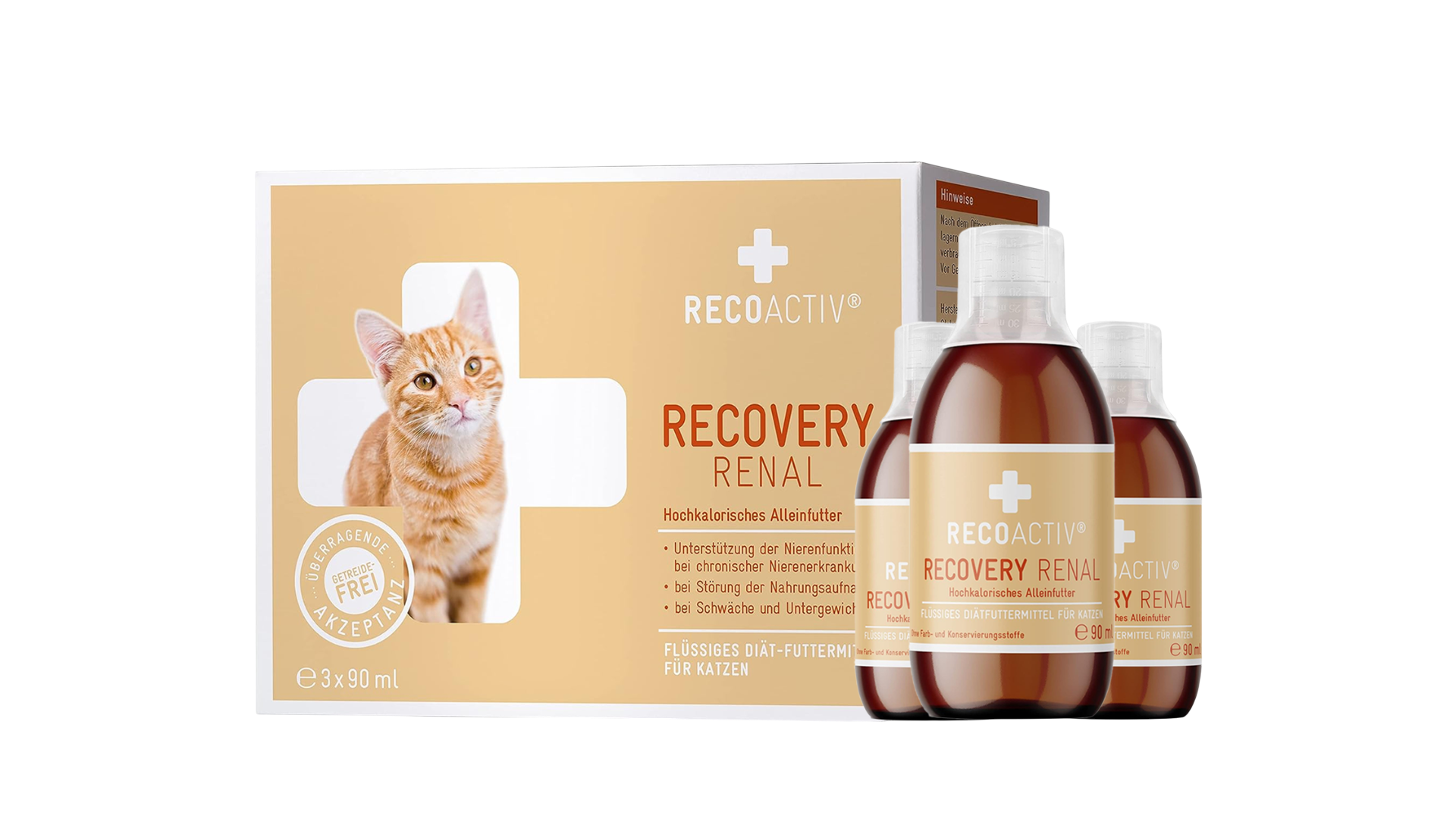
If kidney insufficiency is not treated, it can continue to progress and ultimately lead to kidney failure. This must be countered with targeted treatment. This usually happens through a special kidney diet, with which the disease can be halted or at least slowed in its course. A RECOACTIV® kidney supplement for cats is also often useful. The cat then benefits from considerably more quality of life.
Which symptoms occur in chronic kidney disease?
Chronic kidney insufficiency makes itself known through symptoms such as weight loss, loss of appetite, frequent drinking and urination, dehydration, an increased need for sleep, a dull coat and bad breath, although these only show clearly in advanced stages (stage III and IV).
In chronic kidney insufficiency, different stages and the associated symptoms can gradually appear in the cat. The stages are divided from I to IV.
- Stage I – no clinical signs: The cat appears outwardly healthy and no signs of the disease are recognisable.
- Stage II – few clinical signs: While some cats develop first symptoms at this stage, others still show no sign of the illness at this point. Possible symptoms are frequent urination and increased drinking.
- Stage III – clinical signs increase: Only at this stage are clear signs such as frequent drinking and passing of urine, loss of appetite, weight loss, vomiting, a dull and unkempt coat, fluid deficiency and weakness recognisable.
- Stage IV – severe clinical signs: Internal poisoning by toxic metabolic breakdown products takes place in the cat's body. This can lead to severe vomiting, nausea, food refusal, weakness, listlessness and dehydration.
A chronic kidney disease often makes itself known in cats through the following symptoms:
- Weight loss
- Loss of appetite
- Noticeably frequent drinking and urination
- Dehydration
- Increased need for sleep
- Dull and unkempt coat
- Bad breath
- Weakness
These symptoms can, however, also accompany other diseases, so they are not a clear sign that the cat is suffering from chronic kidney insufficiency. In the case of sudden food refusal in cats, other reasons also come into question. It is important to observe the cat. If the symptoms worsen or further ones are added, a visit to the vet must take place without fail.
How is chronic kidney disease diagnosed?
Diagnosis is made through blood tests (SDMA, urea and creatinine values), urine tests (reduced concentration, increased protein excretion) and ultrasound examinations (detection of shrunken kidneys).
Vets can diagnose chronic kidney disease through various examinations:
- Blood test: This establishes how strongly substances that should be excreted in the urine are present in the cat's blood. SDMA, urea and creatinine values are decisive for this. The SDMA value already rises at a 30 per cent loss of function, while urea and creatinine values are only elevated at about two thirds impairment. Advanced insufficiency shows itself through anaemia, acidification of the blood and too high a phosphorus content.
- Urine test: This often reveals that the urine is no longer properly concentrated. In addition, there is increased excretion of protein with the urine.
- Ultrasound examination: Cats with chronic kidney insufficiency often have shrunken kidneys, which can be established through an ultrasound examination.
What consequences do kidney diseases have in cats?
Impaired kidney function can have far-reaching consequences, including an inadequate supply of nutrients (for example minerals), high blood pressure, dehydration, disturbances of the phosphate/calcium balance (overactivity of the parathyroid gland) and, in advanced stages, impairment of vision as well as calcification of the kidneys.
- Inadequate supply of various nutrients, for example minerals
- High blood pressure
- Dehydration
- Overactivity of the parathyroid gland and, as a result, disturbances of the phosphate/calcium balance
- Impairment of vision in advanced stages
- Calcification of the kidneys
What does the optimal treatment look like?
Treatment is based on early diagnosis and is aimed at preventing progressive damage. Important are a change of food to a special kidney diet (less salt and phosphorus, high-quality proteins), ensuring an adequate water intake (drinking fountains if needed) and, where appropriate, medicinal support from the vet.
Once kidney cells are damaged, they can no longer regenerate. That makes it all the more important that an early diagnosis is made. In this case, as a cat owner you can actively counteract progressive damage to the organs.
It is first important that the food is changed. The cat should now take in less salt and phosphorus and needs high-quality, balanced proteins. Special kidney diet food meets these requirements and thus offers the best basis for a successful change of food. Some cats do not accept this well at first, however. Then the use of a RECOACTIV® kidney tonic, such as we offer at RECOACTIV®, is advisable as support.
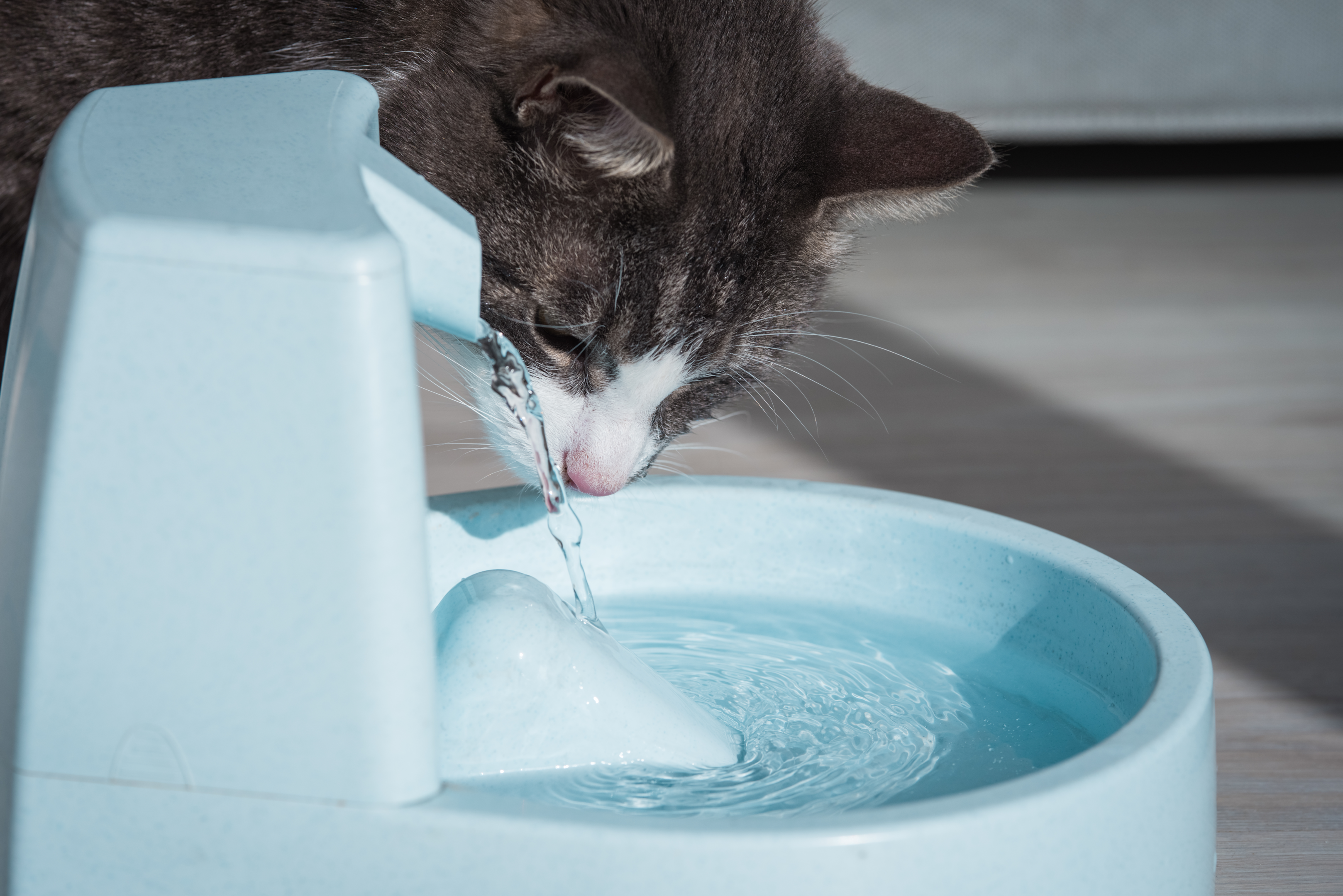
Through a kidney disease, the cat can become dehydrated. That is why you should always make enough fresh water available. Some cats, however, are not sufficiently encouraged by standing water in drinking bowls. In this case, drinking fountains that can be obtained from pet shops help. Because the water in them is always moving, it also does not taste stale so quickly.
In parallel with these measures, treatment with medication may be necessary. A vet decides this, however. Cats receive pharmaceutical support for fluid balance, blood pressure and in the case of a nutrient deficiency.
What are the prospects for successful treatment?
If an age-related kidney injury has been identified, the cat can still live for several years with good care and consistent adherence to all veterinary recommendations.
If an age-related kidney injury has been identified in the cat, it can certainly still live for several years. It is important, however, that the cat is well cared for and that all veterinary recommendations are followed. Ill cats should always be observed and examined regularly. In this way the medicinal treatment can be adjusted again and again.
It is also important that the ill cat is weighed frequently and that food and water intake are monitored. The information that results from this helps vets to keep the course of the cat's illness in view and, if needed, to react to it with changes to the treatment.
Treatment of the ill cat takes place not only in the context of the regular veterinary visits, but above all in everyday life!
What should be borne in mind with a kidney diet?
The kidney diet is decisive in holding back the progression of the disease and is characterised by low-phosphorus food with fewer, but high-quality, balanced proteins, in order to relieve the weakened kidneys.
In order to hold back the progression of the disease as well as possible, the right feeding of the cat is decisive. It now needs a special kidney diet, which is characterised by low-phosphorus food. This also contains fewer proteins than ordinary complete cat food. This ensures that the diseased, weak kidneys do not have to work so much. An additional phosphate binder helps to bind the substance.
Snacks or complementary vitamin preparations often contain ingredients that, in kidney disease, can lead to further damage. For this reason we urgently advise against giving them to the cat without prior discussion with a vet. Especially in cats with kidney insufficiency, it is important that the diet is matched to the degree of the disease.
Not every cat will accept the diet food immediately. It is then important to accustom it to it gradually or to make it more palatable. It may already help the cat if a small amount of the diet food is mixed into its normal food every day. The share of the ordinary food should then be reduced further and further. To get the cat interested in the taste, the additional giving of a little tuna oil or small pieces of fried meat can also help. If the cat still refuses the food, another visit to the vet is important.
How can water intake be encouraged in cats with kidney disease?
Fluid intake is encouraged by placing the water bowl in a quiet, clean place (not next to the litter tray), distributing several drinking bowls, using drinking fountains, or mixing water into the food if the cat refuses to drink.
Cats are often poor drinkers by nature. Regular fluid intake can nevertheless be encouraged. It is important that the water bowl is in a quiet place and is also cleaned or refreshed regularly. Especially in the warm months, algae quickly settle in standing water. The drinking bowl should also not stand directly next to the litter tray.
It is advisable to place several drinking bowls for the cat around the home. This corresponds to its natural drinking behaviour and can awaken curiosity. If that does not help either, so-called drinking fountains for cats are recommended.
If the cat generally refuses to take in fluid in the form of water, you should mix it into the food. Regular infusions may also have to be given, which is necessary in any case if the cat's disease is already far advanced. In every case it must be ensured that toxins are flushed out of the cat's body.
In cats that generally drink and eat poorly, a RECOACTIV® appetite-stimulating complementary dietetic feed can be used preventively.
What help is needed in an acute case?
In an acute case, often caused by dehydration, the cat must receive an infusion with electrolytes at a veterinary practice as quickly as possible; at night or at the weekend, the out-of-hours service should be contacted.
If you notice that a cat with kidney disease suddenly becomes very unwell, dehydration is responsible in many cases. In order to counteract this as quickly as possible, the cat must receive an infusion that is mixed with electrolytes. It should be given at a veterinary practice by professionals.
If the acute case occurs at the weekend or at night, you must turn to a veterinary practice or vets who are currently on out-of-hours duty. If an infusion is needed regularly, it can also be carried out at home. You should, however, have the exact procedure explained to you thoroughly.
Frequently asked questions (FAQ) about impaired kidney function in cats
How does a cat behave when it has kidney problems?
In the course of kidney disease, cats may show reduced appetite or food refusal. Even if the cat takes in food regularly, weight loss is possible. Affected cats often have a dull and unkempt coat, an increased need for sleep, and show weakness and listlessness.
How long do cats live with kidney problems?
It can take months to years before the end stage of chronic kidney insufficiency is reached in cats. Life expectancy differs from animal to animal.
Is a cat in pain when it has kidney disease?
Pain in kidney disease often only appears in advanced stages. However, the cat's gums may become sensitive because of the kidney problems. It notices this especially during coat care and will probably stop grooming at some point.
What should I do if kidney values are poor?
If the vet finds poor kidney values in the cat, an adapted treatment must follow. This may require medication and/or a kidney diet.
Conclusion
The kidneys are vital organs. In many cats, however, serious problems with the kidneys occur with advancing age. Frequent urination and drinking can be first signs of this. Tiredness, a dull coat and other possible symptoms are added. The cat should then be observed closely and taken to a vet, who will take care of further examinations.
If the kidney insufficiency is already chronic, it can no longer be cured, but it can be held back. The right food contributes an important part to this. In the RECOACTIV® online shop we offer a special kidney tonic that can help the cat with kidney problems. Among other things, it serves as support in the case of a change of food to special kidney diet food.