Food refusal in cats: recognising causes and finding solutions
If cats do not want to eat, this is not always a reason to worry. It is important, however, to observe them closely. If a cat takes in no food for more than 24 hours, this can be harmful to its internal organs. The cause of the food refusal then needs to be identified:
Is the cat perhaps unhappy with the food that has been provided? Is it in pain or suffering from tummy trouble?
Whether serious causes lie behind the loss of appetite can ultimately only be established at a veterinary practice. Vets have quite different options and the necessary specialist knowledge to examine the animals thoroughly.
In this article we look at possible causes of food refusal in cats and explain what you can then do.
Why do cats suddenly refuse to eat?
Food refusal in cats can be triggered by inconspicuous reasons such as a changed food recipe, negative feeding experiences or even small details in the surroundings.
Cats often confront their owners with apparently insoluble feeding problems, because the animals stop taking in the food they previously ate readily for unexplained reasons. Even if nothing in the cat's way of life has changed as far as the owner can see, it is sometimes small details that keep the cat from eating its food.
Possible reasons could be changes in the recipe or texture of the food, or a negative experience linked to feeding. All of these factors can contribute to cats suddenly stopping eating their usual food.
Many cat owners trust that their animal will start eating again after a short time, but: the longer the cat refuses food, the less likely it is that the animal will return to the bowl.
What are the possible causes of food refusal in cats?
The causes are varied and range from acute illness (fever, bacterial infections) and dental problems through a change of food and stress to psychological strain or food obtained outside the home.
The causes of poor food intake or even food refusal can be very varied:
- Illness accompanied by fever and weakness (bite injuries, viral diseases, bacterial infections)
- Operations and the period of convalescence (recovery)
- Diseases of the oral mucosa or the teeth (enamel defects (fluorosis), eosinophilic granuloma complex, gum inflammation)
- A change of food
- Stress (for example from moving house, a change in family circumstances, being cared for by unfamiliar people, or a second animal moving in)
Is the cat eating elsewhere, or has it already had its fill?
Yes, outdoor cats often eat less at home because they have already filled up elsewhere (for example at a neighbour's bowl) or have provided for themselves with mice and birds they have caught.
The cat is not eating? If the cat is an outdoor cat, the reason for food refusal at home can be quite banal: perhaps it has simply already eaten its fill elsewhere. This is especially likely if other cats are kept in the neighbourhood. Occasionally it is simply too tempting for cats to nibble from another cat's bowl. From time to time, food elsewhere also tastes better.
It is equally possible that the cat is providing for itself with mice and birds and that its hunger is already satisfied. In the cases described, a change of food or a little more variety can make sense.
With indoor cats you can of course control much more easily what they take in over the course of the day. If the cat suddenly refuses its (main) food, you should consider whether it is perhaps receiving too many treats in between. Snacks should never replace a cat's main food, because only the main food contains all the important nutrients a cat needs to lead a healthy life.
Does the problem lie with the food itself?
Yes, the problem often lies with the food if it lacks freshness (especially in hot weather), the variety is unfamiliar, the food has spoiled, the texture does not suit the cat, or there is satiety from daily repetition.
If something is wrong with the cat's food, it will most likely refuse it as well. These reasons may apply:
- Lack of freshness: Especially at high temperatures, moist cat food can lose its freshness quickly. Cats are sensitive animals and often notice this from the smell alone.
- An unfamiliar, new variety of food: Has the food variety been changed, or has the manufacturer altered the recipe? In this case too, cats often react at first with refusal. If you want to change the food deliberately, you should do so slowly and step by step. It makes sense, for example, to mix a little new food into the familiar food every day. Later you can then replace it completely.
- Spoiled food: It is certainly understandable that a cat will no longer touch spoiled food. Cats know instinctively that eating it would not do them any good.
- Unfamiliar texture: Wet cat food can differ in texture. Some cats prefer chunks, others a creamy food. If the texture of a food is unfamiliar to the cat, it will probably refuse it at first or at least regard it with suspicion.
- Satiety: The same food every day? That can quickly become boring for cats. They are creatures of habit that generally dislike strong changes. Even so, a little variety now and then is fine. It is not advisable to put the same type of meat in front of the cat every day — it could eventually grow tired of it.
Could a food intolerance be the reason?
Yes, food refusal is often caused by a food intolerance or allergy to certain protein sources (for example beef or poultry) or types of cereal, which leads to discomfort and an instinctive refusal of the food.
A food intolerance often lies behind food refusal. Like us humans, cats can react sensitively or even allergically to certain ingredients. In many cases, intolerances occur to certain protein sources in the cat food. The cat may not tolerate certain types of meat such as beef or poultry; intolerances to various types of cereal are also possible.
If the cat cannot utilise these, discomfort, vomiting and diarrhoea often follow. It will then automatically stay away from the food, because it does not want to experience the symptoms again. That is why it is important to find the reason for the intolerance and no longer to give any food that contains this protein source.
Cats that generally have a sensitive stomach can benefit from sensitive food. It is in any case advisable for them to be examined at a veterinary practice so that the cause of the intolerance can be established. Only then is a sensible change of food possible.
Do dental problems lead to loss of appetite?
Yes, common causes of reduced appetite are dental problems such as missing teeth, tooth changing, inflammation or tartar, because these cause pain and make chewing more difficult.
Cats not infrequently suffer from dental problems that also involve the gums. Often missing teeth, tooth changing, inflammation or tartar can be identified as the cause of the complaints. These in turn mean that cats have less appetite. If you suspect a problem with your own cat's teeth, you should take it to a vet.
Additional feeding of dry food can be useful, because chewing can help to clear tartar from the teeth.
What influence do age and senility have on eating behaviour?
In older cats, chronic conditions (kidney weakness, cardiovascular disease or liver disease) often lead to declining appetite. In addition, a fading sense of smell can mean the cat simply can no longer smell its food and therefore has no appetite.
Older cats often have various conditions such as chronic kidney weakness, cardiovascular disease or liver disease. In all cases, declining appetite is usually among the symptoms. For this reason it is important to have older cats examined by a vet frequently. The earlier a condition is recognised, the better it can be countered with medication and particular foods.
In older cats, however, sensory abilities such as the sense of smell often decline as well. It may then be that the cat simply has no appetite because it cannot smell its food.
Can organic diseases trigger food refusal?
Yes, serious organic diseases such as inflammation of the stomach or intestines, metabolic disorders (kidney, gallbladder or liver disease) or tumours are possible reasons for food refusal.
Younger cats can also suffer from serious diseases that represent a possible reason for food refusal. It is conceivable, for example, that a disease of certain organs is present.
Vets can rule out various illnesses using blood, urine and stool samples. This is also possible with an ultrasound examination. If further symptoms such as lethargy, nausea or diarrhoea are added, swift action is needed.
These illnesses can lead to a cat suddenly no longer eating:
- Inflammation of the stomach or the gastric mucosa, as well as intestinal or pancreatic inflammation
- Metabolic disorders such as kidney, gallbladder and liver disease
- Tumours
Are infections or parasites a cause of loss of appetite?
Yes, infections caused by viruses, bacteria or parasites (such as worms) are a common cause of food refusal, because they are accompanied by symptoms such as fever, exhaustion, digestive complaints and an impaired sense of smell.
If a cat's immune system is fighting an infection, this is a common cause of food refusal. Infections arise through viruses, bacteria or parasites and are sometimes accompanied by symptoms of a cold or flu. These include:
- Exhaustion
- Fever
- Apathy
- Intense thirst
- Impaired taste and smell
- Loss of appetite
- Anorexia (emaciation)
A certain discomfort often occurs in connection with a parasite infestation, for example by worms. That can be a reason why the cat then no longer eats properly.
Can psychological strain lead to food refusal?
Yes, cats are sensitive animals that can react to psychological strain caused by stress (moving house, noisy children, new animals), hormonal imbalance (being in season, pregnancy) or a negative association of the feeding place with an illness or medication by refusing food.
Cats are generally sensitive animals that sometimes suffer from psychological strain. What the cat perceives as a strain can vary greatly. It is possible, for example, that it finds a change of food stressful. It is equally possible that the cat is startled by noisy children or other animals in the household. Cats that are in season, pregnant or nursing often eat poorly because their hormones are out of balance.
These circumstances of life can cause cats to feel stressed or psychologically strained:
- Visits to the vet or operations
- Moving house
- Disorientation in an unfamiliar area
- Living together and conflicts with other animals
- Grief for a person they are attached to, or for another animal
- Pregnancy and birth
In some cases it even happens that cats associate their food or feeding place with a negative experience. This can be due to an illness or to medication that the cat had to take together with the food. If such a pattern of behaviour appears, a great deal of love and patience is needed from the cat owners. The animal then has to be gently encouraged to eat again.
This works best if you place its food bowl in a quiet place and give the cat loving attention.
What happens if the cat does not eat? (Metabolism)
Because a cat's body is designed to take in small portions several times a day, the body has to burn fat and muscle when food is withheld. If this state lasts more than 38 hours, the disturbance of fat metabolism leads to the formation of a fatty liver (hepatic lipidosis), which is life-threatening.
Cats are carnivores (meat-eaters), which means they depend on an almost exclusively meat-based diet. For their metabolism they need a great deal of protein and, by comparison, a very small proportion of carbohydrates. If too many carbohydrates are taken in via the food, this can reduce protein digestibility (protein absorption).
Proteins are needed not only for the maintenance of muscle mass and the maintenance of bodily functions; blood sugar is also regulated with the help of proteins. As a rule, cats take in many small portions spread over the day (and also over the night) and can also bridge short periods of hunger well.
Hunger metabolism sets in after a food fast (food refusal) of 3 to 5 days, as a result of which the body tries to synthesise alternative energy sources by releasing fatty acids. This is only possible for a short period, however. Especially in overweight cats, a great many fatty acids are mobilised and accumulate in the liver. This often leads to hepatic lipidosis.
If food refusal occurs, supplementary feeding with a protein-rich food is required immediately, in order to ensure the supply of important nutrients.
Treatment options and how can appetite be stimulated?
For treatment in an acute case, wet food or liquid complementary food is suitable (if necessary by syringe or tube). To stimulate appetite, feeding tricks can be used, such as serving strongly scented treats (tuna), warming wet food, moistening dry food or giving special dietary supplements.
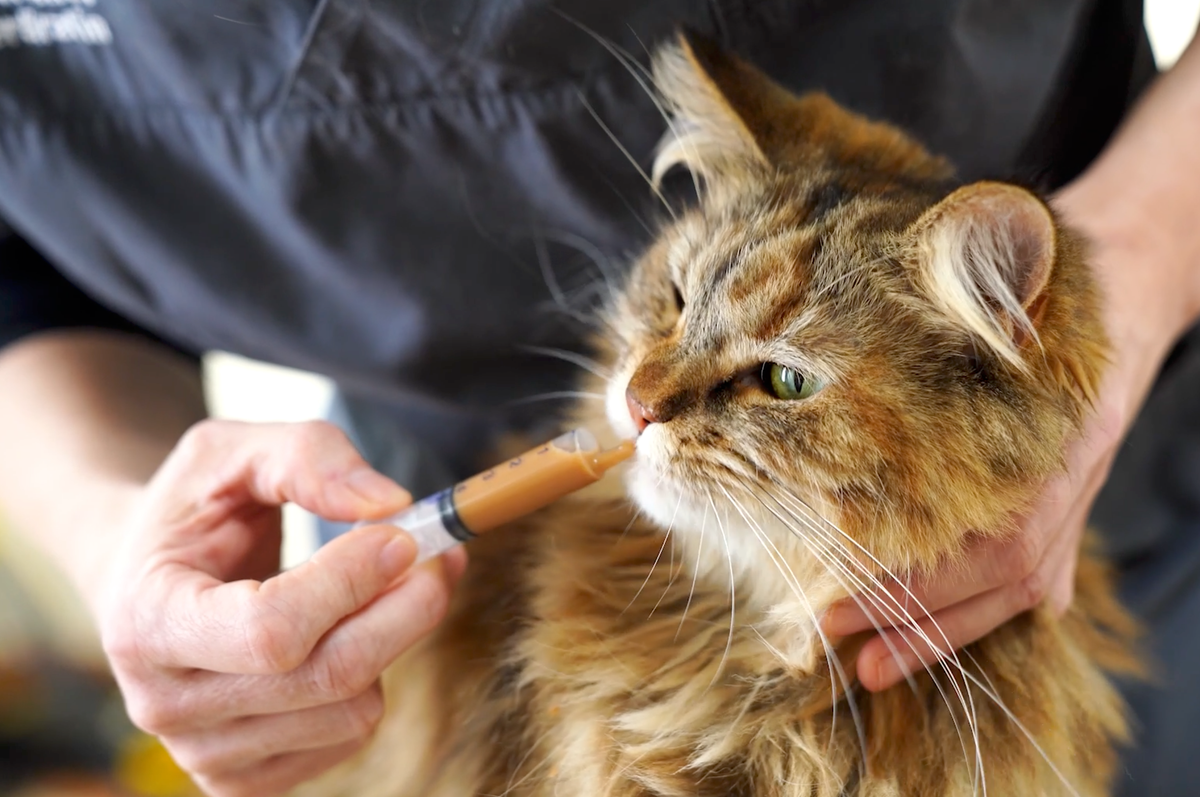
If cats are not eating, wet food or liquid complementary food is a suitable way of providing for the animals, because it can be taken in more easily and requires less effort when eating. If the animal is very weakened, the food can be given directly into the mouth with a syringe. If the cat cannot swallow, it is possible to administer high-calorie food via a tube.
How to stimulate appetite
If a cat suddenly eats poorly or no longer eats at all, this circumstance should on no account be ignored. Instead, it is now important to encourage the cat to eat. With our tips, that should succeed.
Illnesses as possible causes should be ruled out first. If the cat is suffering from a disease, it must be treated by a vet without delay!
The cat is healthy and still eats poorly? Then the following tips are advisable:
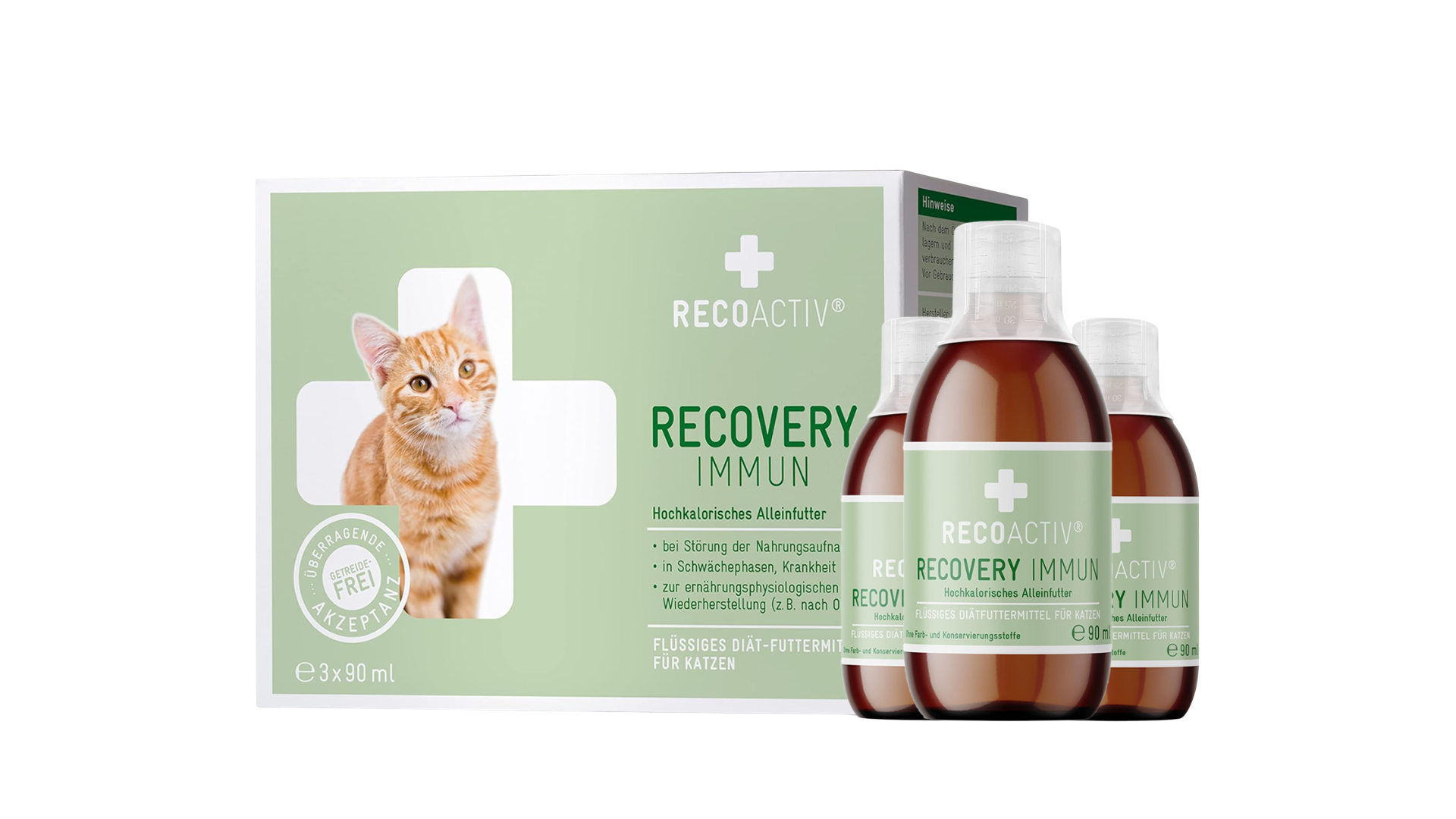
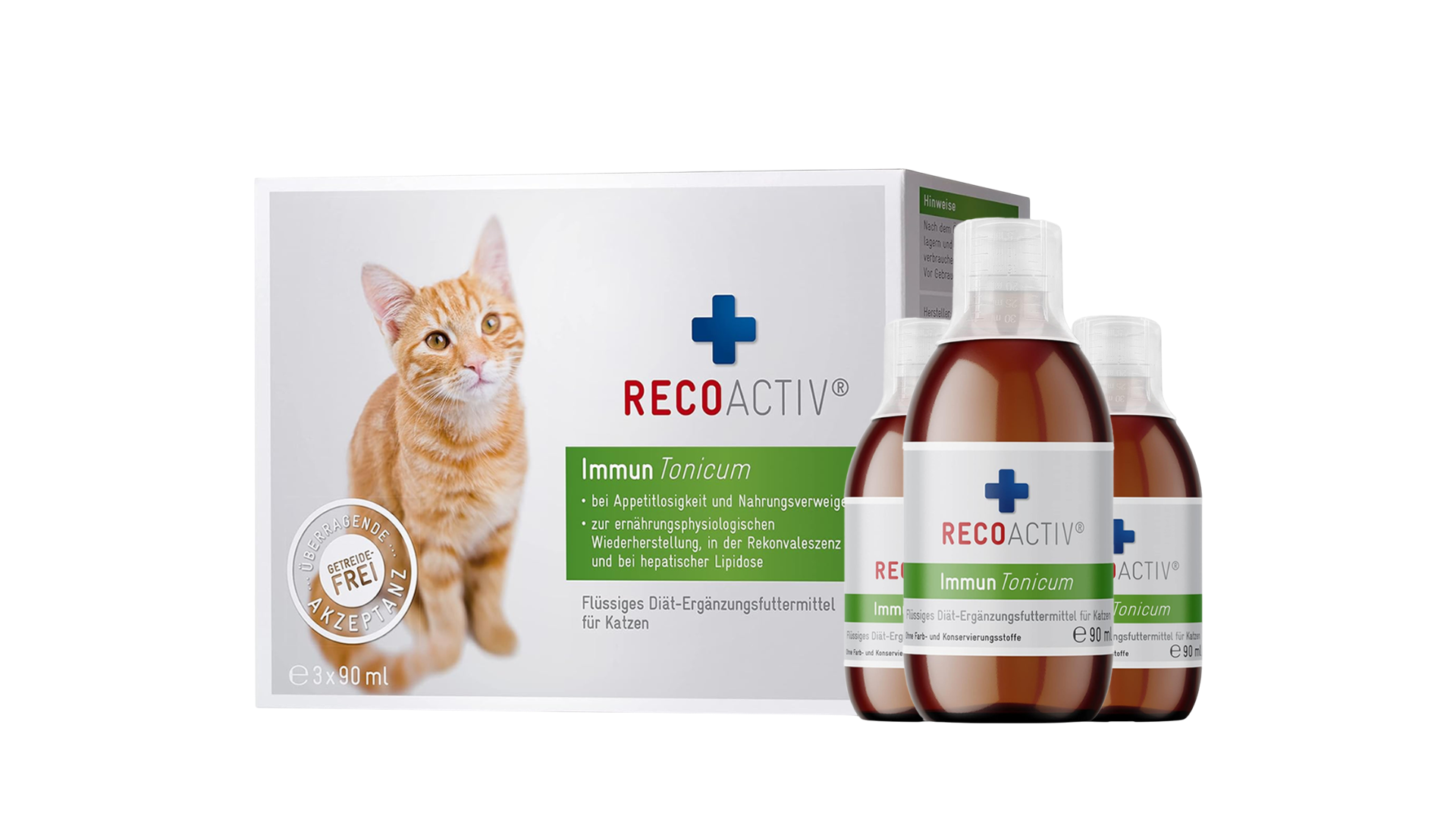
- Serve treats: Sometimes things the cat likes very much are already enough. Tuna smells very strongly and therefore encourages many cats to eat. It is not even necessary to give a whole portion of tuna. A little of it can also be mixed into the normal cat food. A special RECOACTIV® dietary supplement can also help to stimulate a cat's appetite.
- Warm wet food: Warming the food briefly in the microwave means that it then smells more strongly. And a strong, pleasant food smell is well known to awaken a cat's appetite again.
- Moisten dry food: Some cats then find it more pleasant to chew the food.
- Small portions several times a day: It is in a cat's nature to take in several portions a day.
- Sprinkle dry food or snacks over wet food: You must, however, keep the cat's daily requirement in mind. If it also receives dry food, it is important to give less wet food in return.
The cat still does not want to eat? You should not give up straight away. Perhaps it is also down to the location of the food bowl. You can then try to put it in a different place that the cat may prefer.
When should I consult a vet?
Because of the risk of a fatty liver in overweight house cats, you should on no account wait longer than 24 hours before visiting the vet if food is being refused completely.
If a cat has very large fat reserves — as is the case with many house cats — it is at increased risk. If food is being refused completely, you should therefore on no account wait longer than 24 hours before visiting the vet.
Frequently asked questions (FAQ) about loss of appetite in cats
How long is it acceptable for a cat not to eat?
Cats that eat nothing for longer than 24 hours must be examined and treated at a veterinary practice without delay. This is always an emergency.
What should I do if my cat refuses food?
If the cat is no longer eating, swift action is needed. If the cat is otherwise healthy, various tricks can encourage it to eat. Good advice is to change the food slowly to another variety. You should also check whether it is still good and whether the cat has food intolerances.
How can I get my cat to eat again?
If the cat's diet has been changed from wet food to dry food, it may initially find this difficult. The dry food should then be moistened for the house cat. Wet food, on the other hand, can be warmed briefly in the microwave to bring out a stronger smell.
Conclusion
If a cat is no longer eating, this is in every case a sign that something is not right. It should then be observed closely. If further symptoms are added to the loss of appetite, this can under certain circumstances point to a serious illness. A visit to the vet is then advisable. That also applies if the cat has already eaten nothing for longer than 24 hours.
If the animal is healthy and the food refusal nevertheless continues, this should not be ignored either. The causes may then lie with the food itself, and a change of diet may become necessary. Outdoor cats also often help themselves from neighbours' cats' bowls. If there are no recognisable causes for a cat's disturbed eating behaviour, you can try moving its bowl to a different place. It should be in a quiet spot and not immediately next to the litter tray.