Cats – strengthening the immune system
A strong immune system is important so that a cat’s body can protect itself against pathogens. The foundation for this is already laid in the first hours after a kitten is born, through the first milk. It contains a particularly high number of antibodies, which allow the kitten’s immune system to develop and, over time, become fully functional.
In this article we explain how to support a cat’s immune system successfully and give important tips on the right nutrition for cats.
How does a cat’s immune system work?
A cat’s immune system is its natural defences. These are essential so that the animal is protected from pathogens and external influences. While cats receive their first antibodies through taking in their mother’s milk, they develop many of their own over the course of their lives. A first barrier against pathogens is the cat’s skin, but mucous membranes, hair and stomach acid also provide defence.
Only once pathogens have managed to get past these do phagocytes come into play. These recognise foreign bodies, enclose them and finally break them down. Once a cat’s immune system has successfully dealt with a particular pathogen, it can “remember” this strategy. It forms specific antibodies that act against the pathogens next time and, in the best case, fight them off.
What weakens cats’ immune systems?
For a cat’s immune system to work properly, certain things that could weaken it should be avoided.
The following can cause lasting harm to the immune system:
- Unhealthy food: Overloading of the organs is often the result; in addition, such foods are frequently metabolised into waste products and then excreted.
- Obesity: Cats should ideally be of a normal weight. Anything else can have a negative effect on metabolic processes, including the immune system.
- Deficiencies: If a cat is not given all the nutrients it needs for a healthy life, important regulatory cycles can be disrupted or cell production inhibited. It is also possible that the natural barriers, which include the skin and the intestinal wall, become more permeable as a result of the deficiency.
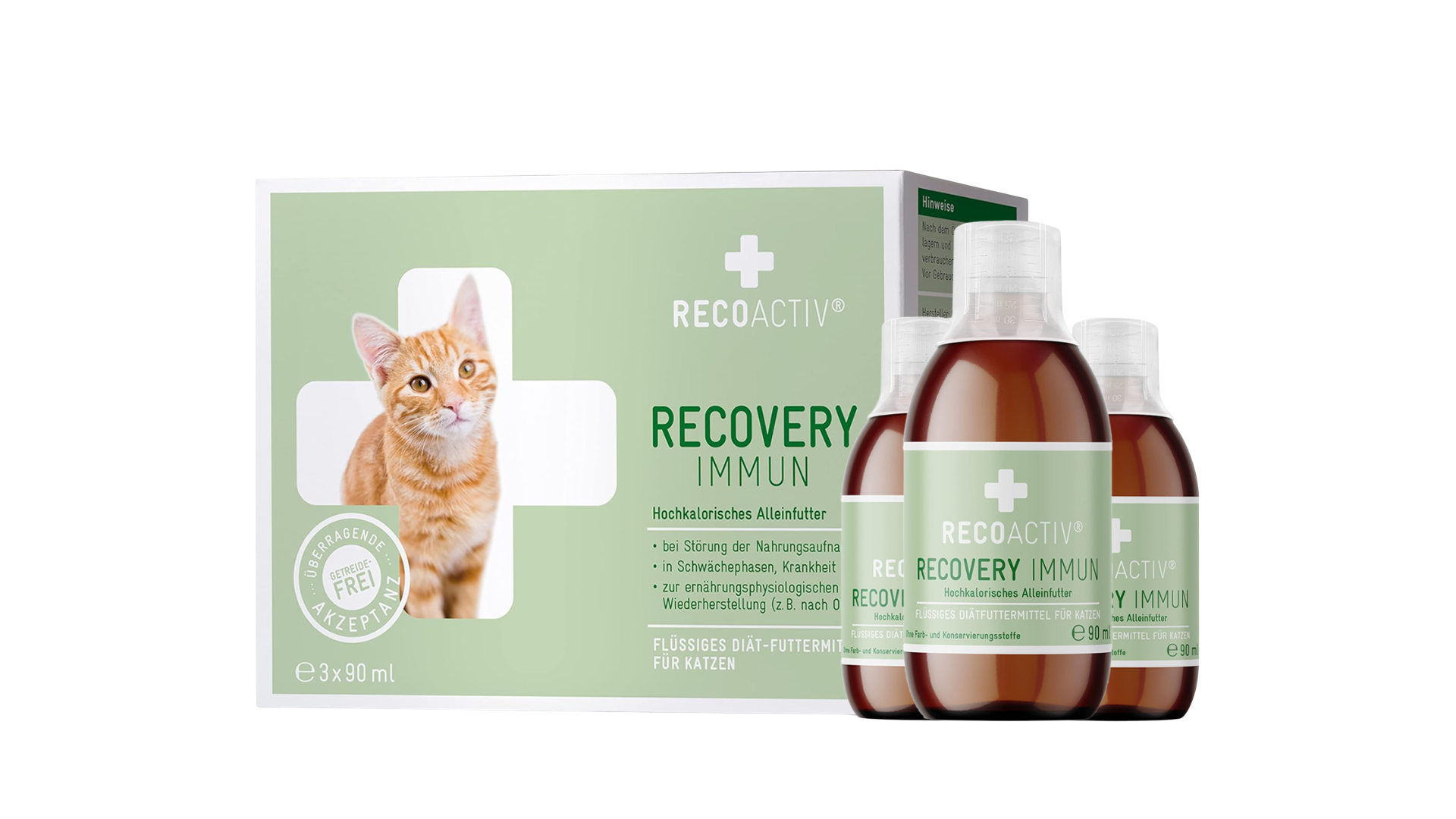
If the cat is weakened, a high-calorie complete food is often helpful.
- Lack of exercise: If cats are noticeably lethargic, tissues may no longer be properly supplied with blood. This slows the transport of defence and messenger substances.
- Stress: Cats are sensitive animals – some of them are also anxious. Factors that promote stress in a cat’s life are sometimes barely noticeable to us. It is all the more important to get to the bottom of the matter if your own cat appears particularly stressed or nervous. Has a new piece of furniture been put in place, or has another pet moved in?
- The problem with stress hormones is that they often have a negative effect on the body’s own defences. To help the cat settle, affectionate attention and quiet feeding and sleeping places are especially important.
- Parasites in the gut: Cats are occasionally affected by parasites such as worms. For young cats in particular this is not always harmless. The parasites can multiply quickly in a cat’s body and put a strain on its defences.
- Chronic organ disease: If organs such as a cat’s kidneys, heart or liver are diseased, this too can have a negative effect on the body’s own defences. The mechanisms for transporting and producing important substances are then often only possible to a limited extent.
- Infections: Feline panleukopenia, feline leukaemia virus or feline immunodeficiency virus can also be dangerous for the defences.
- Medication: Medicines such as cortisone and chemotherapeutic agents inhibit cell division and prevent the production of defence cells.
Strengthening the immune system
First and foremost, healthy nutrition is key to supporting the immune system. This includes the cat receiving all the important nutrients it needs for a healthy life through its food.
If a deficiency of certain nutrients arises through incorrect feeding, the cat’s immune system can be negatively affected. That is why you should always provide your cat with a suitable complete food and, where appropriate, sensible supplements . In this way the cat’s body can form the important antibodies that help protect it from pathogens.
It is also important that the cat gets enough exercise. To encourage movement, you can either play with it or at least provide enough toys for it to occupy itself. Cats should also be able to go out into the fresh air regularly. For indoor cats it is advisable to have a secure balcony available so that they can come into contact with fresh air from time to time.
Cats typically sleep up to 17 hours a day. Being able to do so undisturbed is also of great importance for supporting their immune system. Cats therefore need a comfortable sleeping place and plenty of rest.
Finally, you should also pay attention to adequate hygiene in the areas where the cat eats or does its business. Where cleanliness is lacking, bacteria can multiply more quickly.
Antibodies for support
Antibodies are proteins produced by a cat’s immune system. They repeatedly protect the animal successfully against viruses, harmful bacteria, fungi or parasites. While young cats take in their first antibodies, as already mentioned, with their mother’s milk, further antibodies have to be formed over the course of life. This is possible through feeding high-quality food.
Natural immune boosters for cats
To support a cat’s immune system, you can turn to various medicinal herbs and other natural ingredients. These include, among others, rosehip, coneflower and cat’s claw. Ideally these are contained in a high-quality complete or complementary food for cats.
Healthy, high-quality food
For a cat to be able to produce enough antibodies at all times, it must always receive high-quality nutrients with its food. Additives such as sugar and cereals should not be present in cat food, or only in small amounts. In addition, the general term “animal by-products” can indicate that the food is of poorer quality.
Once a healthy food that the cat enjoys has been found, you can also treat it to a suitable food supplement. The only point to watch is that it does not suffer from an excess of certain nutrients.
Healthy fats and oils
Essential fatty acids, which are involved in important functions in the cat’s body, cannot be produced by cats themselves. They must therefore be added to the diet in sufficient quantity and of correspondingly good quality. Important fats and oils include omega-3 and omega-6 fatty acids. These are involved in building cell membranes. They also have anti-inflammatory properties and a supporting effect in helping to keep a cat’s liver, kidneys, skin and musculoskeletal system healthy.
Omega-6 fatty acids are present in relatively high amounts in meat and fish, while omega-3 fatty acids can be added to the diet via oils and fats. Salmon oil or linseed oil are best suited for this.
Superfood spirulina algae
Among the foods that can help support a cat’s defences, spirulina algae is regarded as a genuine superfood. And with good reason, as alongside valuable plant proteins, vitamins and minerals it can also offer support in cases of inflammation and illnesses caused by viruses or bacteria.
Fluids
It is no secret that cats are generally poor drinkers. That is why, for both indoor cats and those with outdoor access, you should make sure that they take in enough fluid over the course of the day. If the water bowl is outdoors, it must be checked regularly in winter, as a layer of ice can form on it quickly.
Some cats simply refuse to drink water from an ordinary bowl. In that case, setting up a special drinking fountain for cats may help. The running water encourages them to drink.
If that does not help either, you can choose a wet food that the cat particularly enjoys. Wet food contains significantly more fluid than dry food for cats and can therefore help to offset a lack of fluids.
FAQ
For cats to stay in the best of health for as long as possible, they need strong defences. But do cats have a strong immune system by nature? And which vitamins are important for maintaining it? We answer these and other questions in this section.
Which vitamins are important for cats?
Vitamins that cats definitely need are vitamin C (for metabolism and the immune system), B vitamins (metabolism and skin function), vitamin D (building bones and teeth) and vitamin A (for the eyes and muscle building)
What can I do to strengthen the immune system?
A cat must be given high-quality food, get enough exercise and breathe fresh air. Enough rest and sleep are also important for supporting the body’s own defences.
Do cats have a strong immune system?
So that cats can build a well-functioning immune system, they already receive important antibodies with their mother’s milk shortly after birth.
Which complete food for cats?
A good complete food for cats must be composed so that the requirement for all nutrients is covered. It can be either wet or dry food. What matters is that it is labelled as a complete food.
Conclusion
Cats – like us – need their own defence system in order to keep dangerous pathogens at bay. Shortly after birth they receive their first antibodies from their mother’s milk, but more should be formed over the course of their lives.
To support a cat’s immune system, owners are advised to rely on healthy cat food with all the important nutrients. In this way you protect these sensitive animals from infections and provide support at every time of year.
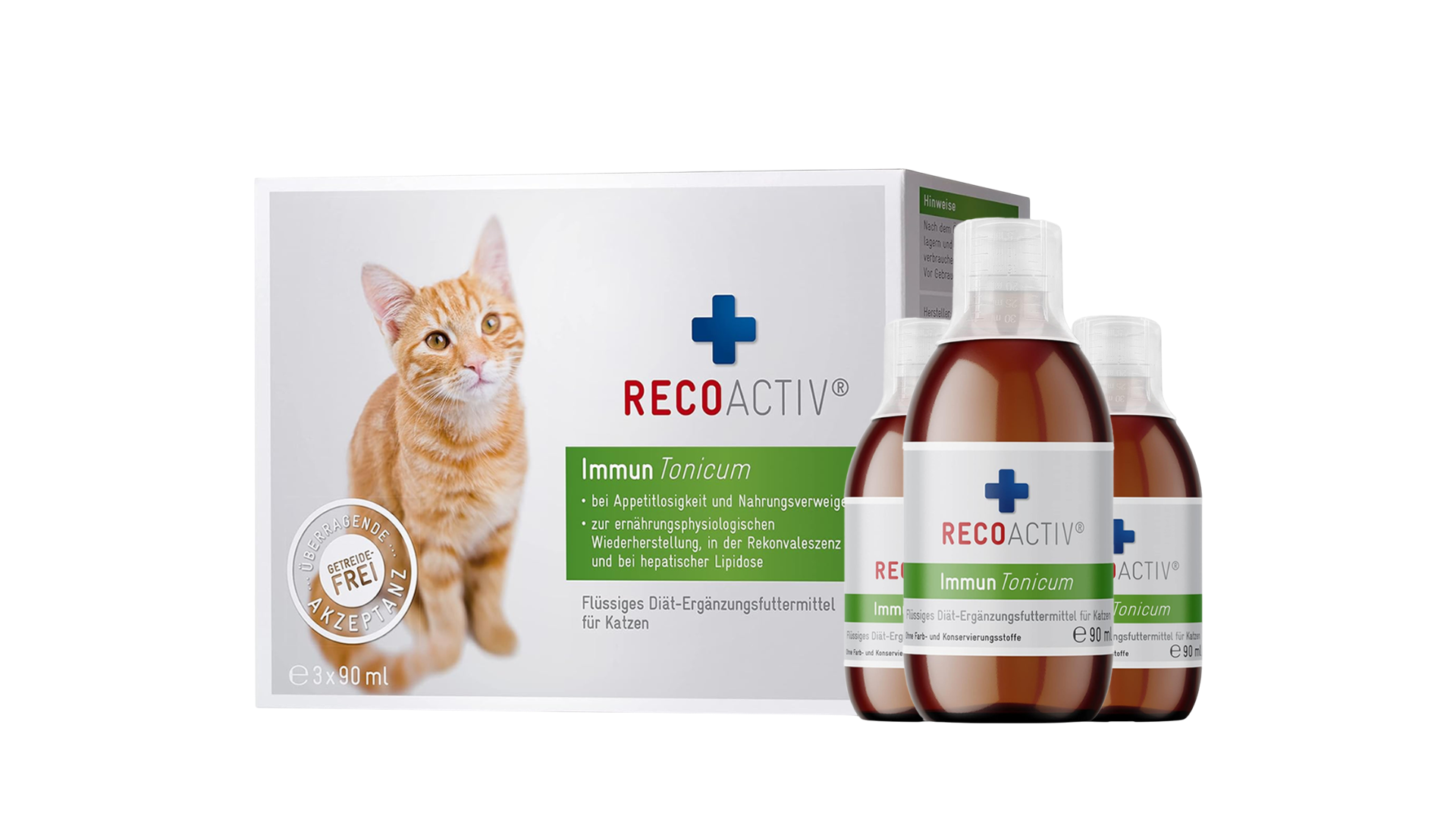
With RECOACTIV® products, a significant contribution can be made to maintaining and supporting the immune system. As a rule they are very readily accepted by cats.