


Dog body temperature: how to measure it and what to do if there is a fever
If dogs suddenly become particularly lethargic and limp, this can have various causes. In some cases an illness is behind it, which among other things can involve a fever. A raised body temperature in the dog is often not recognised very quickly. There are, however, a few signs that clearly point to it and that owners should know.
In this article we look at when a dog is said to have a fever, how it can be recognised and what helps. Fever can be a sign of different illnesses.
Body temperature in dogs: what you should know
To find out whether a dog has a fever, you need to know what body temperature is normal in dogs. The normal temperature is between 37.5 and 39 degrees Celsius in adult dogs; in puppies it is up to 39.5 degrees. A fever is spoken of once the temperature goes above 40 degrees, and a high fever above 41 degrees.
By way of comparison: a person’s normal body temperature is between 36 and 37 degrees. A dog’s normal temperature is therefore higher. It can also vary somewhat over the course of the day. It is lowest in the morning hours or after the dog has been very active. If the dog has spent a long time in the sun, the temperature can rise a little, which in the normal course of events is no cause for concern.
Fever signals: how do I tell if my dog has a fever?
The clearest sign of fever in a dog is a raised internal body temperature. There are also external signs that suggest a fever. These include:
- trembling/shivering
- very warm ears
- thirst
- refusal of food
- tiredness/lethargy
- panting
- raised pulse
- diarrhoea or very dry, firm faeces
Because of their coat, fever in dogs is often not noticed immediately. The signs listed above, however, indicate that something is not right. If you notice these or other unusual signs or behaviours in your dog, you should check the body temperature to be sure.
Whether the dog’s body feels unusually warm is best established at sparsely haired areas, such as the ears. There are also a few things you should definitely bear in mind when taking the measurement itself.
Taking a temperature accurately – the rectal method
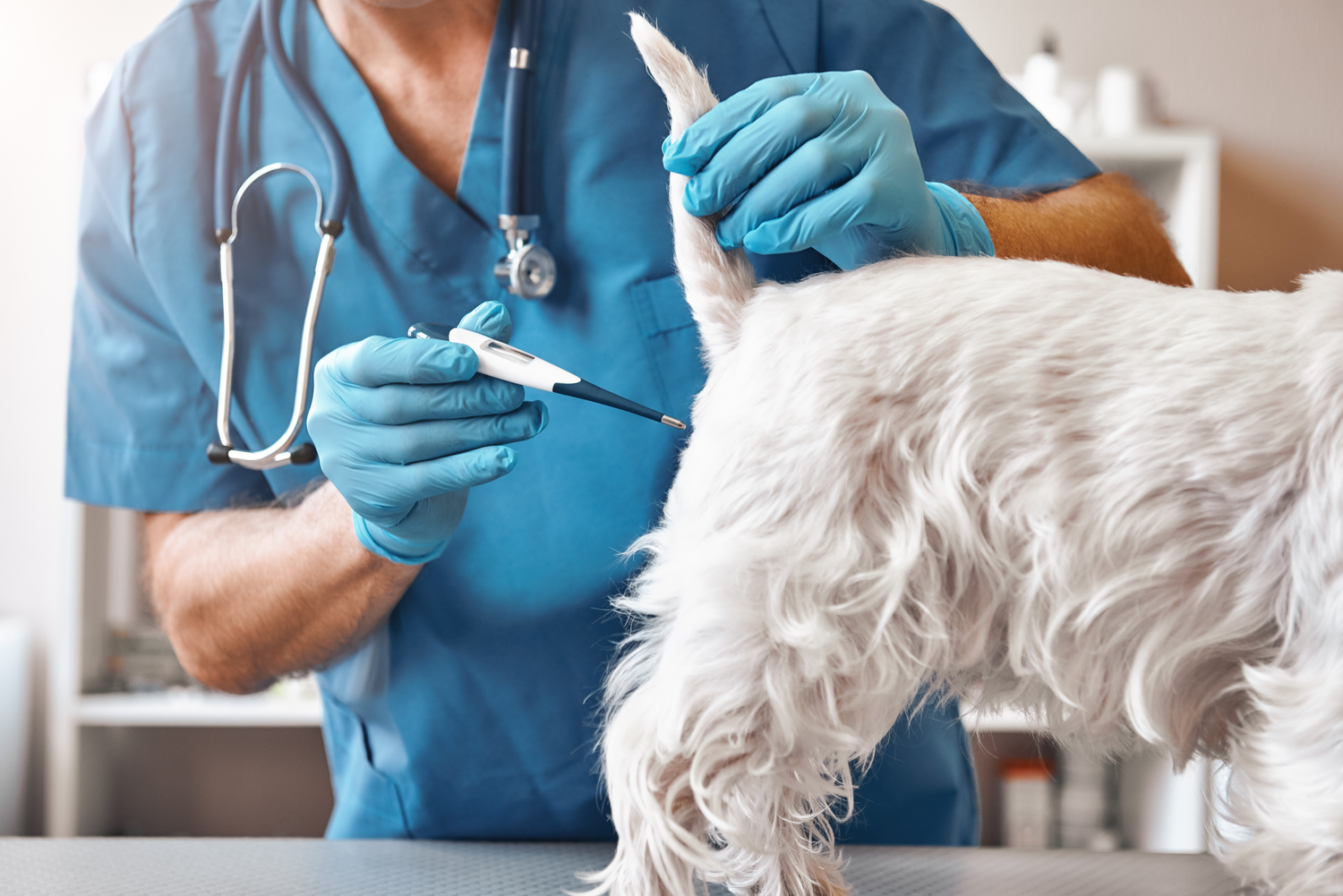
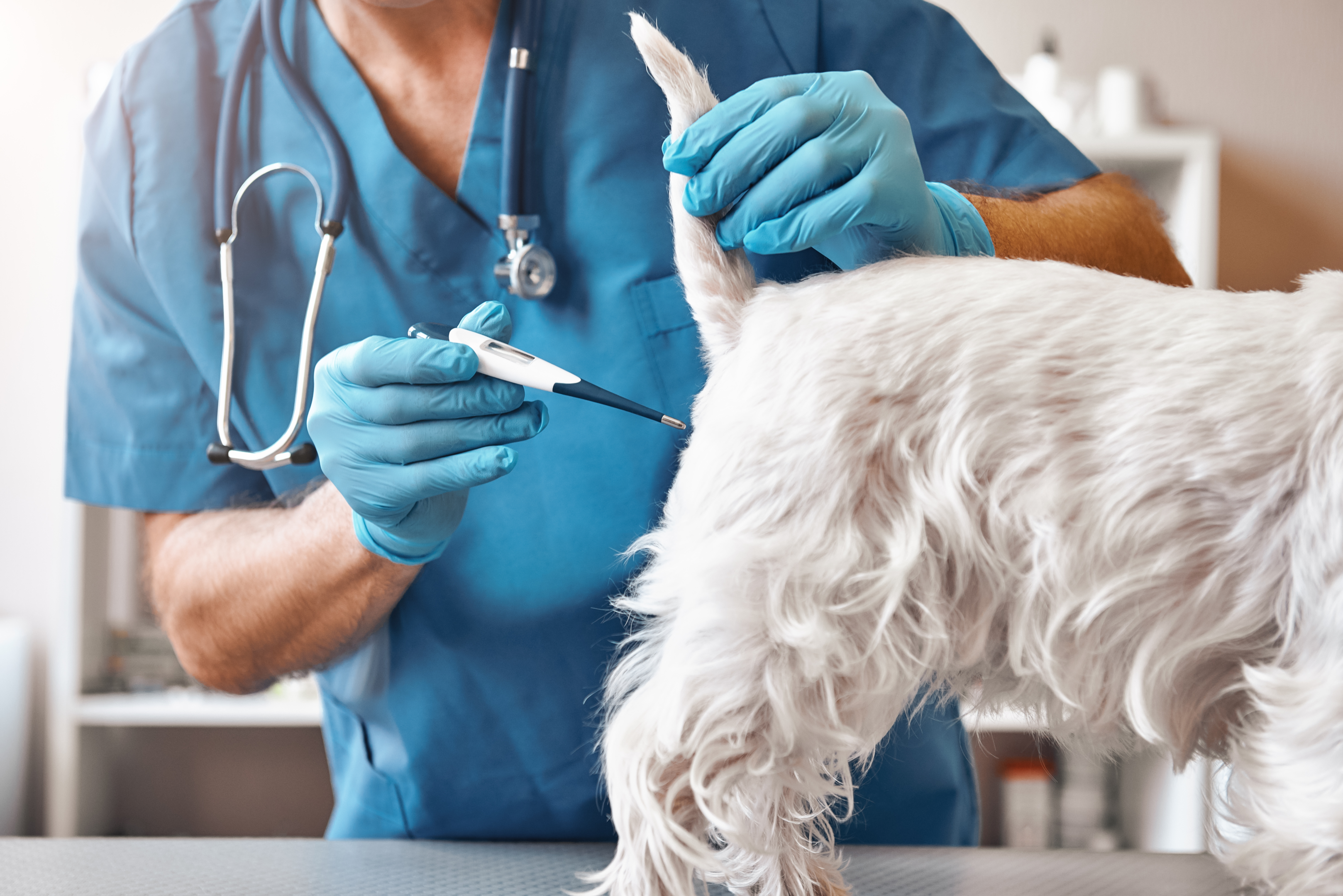
To establish reliably whether a dog has a fever, its body temperature should be measured with a thermometer. It is important, however, not simply to use a conventional human thermometer. It can be very difficult for a dog to stay still for as long as a normal thermometer requires. The likely result is inaccurate readings.
Digital thermometers are better suited to measuring body temperature in dogs. Models with an angled tip are developed specifically for dogs, making the temperature display easier to read. Even then, however, it is important that the dog stays completely still at least for a short time. It is best to involve a second person who can hold the dog and provide some distraction – for example through stroking or calming words.
If a dog’s temperature has never been taken before, it may react with fear or aggression. It is then especially important to proceed carefully when measuring. If the dog cannot be managed, it is better to stop and see a vet instead. For temperature-taking to work well in adult dogs, they should already be accustomed to it as puppies.
For the most accurate results, a rectal measurement should be carried out. To do this, insert the thermometer a few centimetres into the anus, with the tip of the thermometer carefully resting against the inside of the rectum. Skin contact is important, because without it only the temperature of the warm air in that area is measured.
This procedure can be uncomfortable for the dog, which is why it is advisable to coat the thermometer beforehand with a little medical lubricating gel or petroleum jelly. It is also important to clean and disinfect the thermometer thoroughly before and after the measurement so that no bacteria remain on it.
Avoiding measurement errors – unsuitable sites
While in people you can also measure in other places, such as the mouth or under the armpits, these methods are not recommended in dogs because they can lead to measurement errors. Measurement in the mouth is particularly problematic. The dog could bite the thermometer or swallow it. There is also a risk of injury to the owner.
If, on the other hand, you measure in the ears, the hair inside them can distort the reading. That means: only the rectal method is suitable in dogs for establishing a raised temperature or a fever.
Intuition and observation: recognising fever in a dog without a thermometer
Fever in a dog can have many causes, as in most cases it is an accompanying sign of other illnesses. At the same time, the raised body temperature sets the defences in motion. The dog’s immune system then works much more intensively while inflammation and pathogens are being fought. Poisoning can also be a reason for the fever.
To be sure that the dog has a fever, you should always use a thermometer. That is why it is important to obtain a suitable product before the dog shows signs of illness. If no thermometer is to hand, you can still recognise typical signs of fever, as the dog’s body temperature can be felt. This also works best at as hairless an area as possible, such as the paws, the ears and the loin area, as well as under the armpits or on the muzzle.
A further indication of fever in a dog is warm, dry gums. These can also be noticeably reddened. If there are signs of fever, the dog must be examined at a veterinary practice promptly. Only then can an accurate diagnosis be made and the appropriate treatment started.
Therapeutic approaches: how you can help your dog with a fever
If a dog has a fever, it seems natural to try to bring it down with suitable treatment. This is not advisable in all cases, however. Instead, the dog must first be examined by a vet in order to obtain an accurate diagnosis. If the dog has an infection and therefore a moderate fever, bringing the fever down can be counterproductive. Treatment of the infection should then take place instead.
Before appropriate therapy is carried out, the vet conducts a thorough history in order to establish the cause of the fever. In some cases further diagnostics are needed, such as ultrasound, blood tests or tissue sampling. It is also possible to bring the fever down with medication or to give an infusion. The treatment of the fever therefore always depends on the underlying cause.
Fever or hyperthermia? Different temperature abnormalities in dogs
The term hyperthermia literally means overheating. This must be distinguished from fever. The difference is that fever is a rise in the normal temperature that is controlled by the regulatory centre (hypothalamus). That means the set point shifts upwards and the dog’s body therefore aims for a higher temperature.
Hyperthermia, by contrast, is not triggered by the hypothalamus, so the set point does not shift upwards either. Instead the animal’s body heats up while the hypothalamus tries to keep the body temperature within the limits of the set point.
Typical causes of overheating include, for example, physical overexertion or overheating from the outside. The latter happens, for example, if a dog is left in a parked car. As temperatures inside the car rise sharply, the animal begins to overheat. A life-threatening heatstroke can be triggered if the body temperature rises to 42 to 43 °C.
Hyperthermia therefore does not arise because of fever-inducing substances. For that reason it also cannot be treated with medicines intended to bring a fever down. Instead, an overheated animal must be taken to a cooler place as quickly as possible, while stress must be avoided at all costs.
Preventive measures against fever in dogs
Over the course of their lives, dogs can develop a fever from time to time. Ruling this out completely is unfortunately not possible. You can, however, do something to support the dog’s health. Alongside a balanced diet, this includes enough exercise in everyday life. Both factors contribute to supporting the immune system. In this way the dog’s body has the chance to cope well with infections and fight them with its own resources.
In some cases fever in a dog is also caused by injuries or wounds. Only if these are treated early can the development of a fever be prevented. If the dog has recently had surgery or been given an infusion, its body temperature should be checked at regular intervals. If in doubt, a vet should always be consulted.
FAQ
Like us, dogs can develop a fever from time to time. A serious illness is not always behind it. The dog’s signs should nevertheless be taken seriously, and you should inform yourself well about possible causes. In this section we answer frequently asked questions on fever in dogs.
What is a raised temperature in a dog?
Dogs have a higher normal temperature than we do. At 40 degrees Celsius a dog is said to have a raised temperature; at 41 degrees Celsius this is called a fever. If this persists for a longer period and is not treated, life-threatening conditions can arise. Above 41 degrees the dog has a high fever, which can also be acutely life-threatening. A dog with a fever must be taken to the vet promptly.
How low may a dog’s temperature be?
A dog’s normal temperature is 37.5 to 39.0 °C. It should not be markedly below or above this.
What is a low temperature in a dog?
A low temperature in a dog refers to a sharp drop in body temperature. Typical signs can include trembling, restlessness, increased breathing and a raised heart rate. In a severe low temperature, stiffening of the muscles and dilation of the pupils can also occur. To prevent the dog from losing consciousness, it should be taken to a vet promptly.
Conclusion
When dogs have a fever, this usually shows as lethargy. Depending on the underlying illness, further signs can appear. The most reliable way to find out whether a dog has a fever is to measure the body temperature with a thermometer. A normal human thermometer should not be used, however, because it is not ideally suited to use in dogs.
You can take the temperature yourself. If this confirms the suspicion of a fever, the causes must be identified in the next step. Vets have the necessary knowledge and the means to make a diagnosis.
Depending on the cause and the course of the illness, different treatment approaches come into question for affected dogs. While in some cases it can be useful and necessary to bring the dog’s fever down with medication, in other illnesses this is counterproductive, so that the underlying condition must be treated instead.
To help prevent fever in dogs, it is important to provide them with a balanced diet together with enough exercise.
