


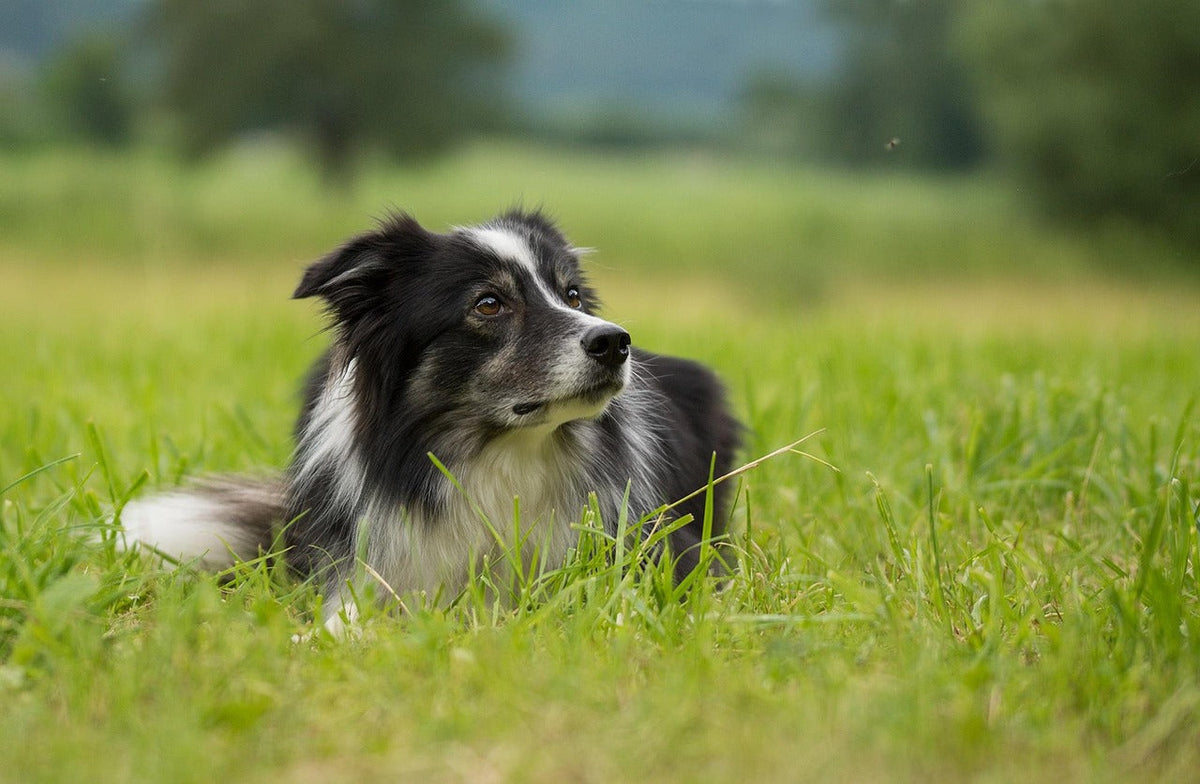
Why do dogs eat grass? 7 important reasons and what you should know
A dog’s stomach is not designed to break down plants. Grass that has been eaten is often passed again undigested or surrounded by mucus. Diarrhoea or vomiting can also occur after a large amount has been eaten. That said, a dog occasionally eating grass is a normal behaviour.
So why do dogs eat grass? Which behaviours and signs can be a cause for concern? And how should dog owners respond if they suspect an illness?

Dogs eating grass: something quite ordinary
Dogs are omnivores and will sometimes also turn their attention to blades of grass marked by other dogs. Researchers suspect that the behaviour stems from a primal instinct and serves to eliminate those markings.
It is also possible that grass-eating goes back to the behaviour of their ancestors. They had to search laboriously for food and sometimes made do with herbs and wild plants.
Another theory traces grass-eating in dogs to boredom or a liking for the taste of grass. Some dogs are said to eat grass on walks out of tedium, while others see the plants as a welcome change in their diet.
Dogs also learn to eat grass from their mothers. It could therefore be a learned behaviour as well. However, if a dog eats too much grass, this can cause it to be sick. Some dogs do not even chew the grass. Digestive complaints and diarrhoea can then follow.
Dog owners understandably worry at this point. And in this situation a vet should indeed be consulted so that the animal can be examined thoroughly. One tip: to have all the important information to hand, owners should keep a diary of how often the dog eats grass and what happens afterwards.
Dogs eat grass for many reasons
Specific reasons why a dog eats grass have not yet been scientifically proven. The following triggers may, however, play a role:
- Digestive problems: Bone fragments, hair or other foreign bodies can cause stomach discomfort. To make itself sick, the dog eats grass. In this way the irritants leave the body. Not every dog is sick after eating grass, however. Alternatively, foreign bodies can be passed in the faeces. The blades of grass then serve a similar function to sauerkraut, which can be given for stomach complaints. The stomach and intestinal walls remain unharmed.
- Intolerances: If a dog is sensitive to certain ingredients in its food, this can show as diarrhoea or vomiting. In this case many dogs tend to eat more grass. If owners identify an intolerance, the food should be changed.
- Nutrient deficiency: Grass contains water, proteins, carbohydrates and minerals. If a dog is undernourished, it may eat grass to make up the shortfall. It should be borne in mind that a nutrient deficiency is usually due to an incorrect diet. Owners should use the dog’s age and activity level as the basis for its energy needs.
- Thirst: Grass has a high water content. Thirsty dogs eat grass to quench their thirst.
- Stress: Stress can cause blood sugar levels to drop. Grass contains sugar-like components, so the dog instinctively starts chewing grass.
- Boredom: Not every dog is content with the usual walk. If a dog becomes bored, it may start eating grass or look for other ways to occupy itself.
- Illnesses: Excessive grass-eating can also be interpreted as a possible sign of conditions such as kidney weakness or liver weakness.
A calming effect
Stress can lead a dog to eat grass on walks. It is worth remembering that dogs can react sensitively to noise, bustle and other dogs. Rather like chewing gum in people, eating herbs and wild plants can help dogs to relax.
Dogs are also said to eat more grass in order to redirect the behaviour of other dogs. To reduce grass-eating, it can be worth avoiding crowded parks or a walking route along a main road. A sensitive dog benefits from quieter surroundings instead.
Dog eating grass: when is it a problem?
Vomiting, diarrhoea, constipation or blood-stained faeces: if a dog eats small amounts of grass, there is no need to worry. However, if the dog has gastrointestinal complaints and at the same time eats a noticeably large amount of grass, caution is needed. Blood in the faeces or in vomit should also be taken seriously.
In all of these cases, owners should take the dog to the vet promptly and have it examined. Alongside inflammation of the gastrointestinal tract, a blockage of the bowel can also occur, for example.
Is a blade of grass protruding from the anus? It should not be removed at home. Pulling on a protruding blade of grass can injure the mucous membranes of the rectum or anus. A vet, by contrast, can remove the blade without injuring the animal.
Watching for signs of poisoning
Thorn apple, angel’s trumpet, spurges, white bryony, broom and many other plants often grow in public places such as parks and in many gardens. A distinction is made between highly toxic and mildly toxic plants.
If a dog eats such a plant, poisoning can show as vomiting, restlessness, fever, excessive salivation, rapid breathing or an elevated heart rate.
If behaviour is unusual
Changed behaviour can indicate that an illness is present. Frantic grass-eating, eating grass together with soil, and refusing dog food should all prompt owners to visit a veterinary practice.
The risk of lungworm
Lungworms use creatures such as slugs and snails as intermediate hosts. If a dog eats the snail, it can become infected with the parasites. Young, curious dogs tend to eat snails directly.
Older dogs often take in the parasites when snails settle on grass and the dog then eats it. In the dog’s intestine, the larvae leave the intermediate host and migrate to the dog’s lungs.
The adult worms lay eggs from which larvae hatch. The larvae in turn attack the dog’s lung tissue.
Dog eating grass: when and how you should act
A dog occasionally eating greenery is not a cause for concern. Being sick after eating grass is also considered normal if it happens only rarely. It is possible that eating grass serves to help with the passing of foreign bodies in dogs and is used instinctively.
However, if the dog eats grass in large quantities and is then sick or develops diarrhoea, a veterinary examination should be arranged.
Pesticides are also used for pest control in gardens, parks and even on fields. If a dog has eaten contaminated grass, a vet should be consulted immediately. On busy roads, pollutants from cars can also settle on the grass at the roadside.
At the veterinary practice the vet will make a finding, after which individual treatment follows.
FAQ: Why do dogs eat grass?
What is my dog lacking if it eats grass?
A high intake of grass in a dog can be linked to numerous causes, such as a parasite infestation or inflammation in the body.
Is it bad if dogs eat grass?
Dogs eating grass is generally harmless. However, a noticeably increased intake together with accompanying signs such as diarrhoea or vomiting should be assessed by a vet.
What helps against grass-eating in dogs?
Once a diagnosis has been made, a treatment plan can be drawn up. For example, stressful situations on walks can be avoided, or lungworm can be treated with medication.
Why do dogs eat grass and then be sick?
Dogs may eat grass in order to pass foreign bodies.
Is your dog eating grass? You now know what to do
Why dogs eat grass has not yet been proven. Possible reasons include digestive problems, intolerances, a nutrient deficiency, thirst, stress or serious illness. Some dogs are also said to eat grass to pass the time.
Anyone who notices their dog taking in larger amounts of herbs and wild plants, and who also sees signs such as vomiting, diarrhoea or a change in the dog’s behaviour, should consult a veterinary practice promptly.
